Spanish Wine
From LoveToKnow Wine
Iberian Vino—A Rising Star With a Past
For centuries, Spanish wine has been known more as plonk rather than fine wine, better drunk as Sangria than flying solo in a glass, and appreciated more as the fortified Jerez elixir from the the south. And who knows, if Spanish wine had made a better contribution to the Roman Empire, it might not have fallen on such hard times. On second thought, perhaps the Empire would have gone down the cistern even sooner.
In fact, Spanish wine has a long history, with vines growing in the diverse and primarily arid country since 4000 B.C. If one knows Spain they know the country is enamored with its history and traditions and do not give them up easily, for good or bad. But it's only in modern times, after much of Spain's wine industry broke with its centuries-old tradition of viticulture and winemaking that the country's wines have risen beyond their reflexive and derisive plonk perception.
Quality and quantity have improved, immeasurably influenced by the French wine industry to the immediate north and by adopting modern winemaking practices without abandoning the best from the past. Today, Spanish wine ranks third in the world in terms of production while the nation produces world-class ranking wines and offers some of the best wine values anywhere. Ironically, while Spain is one of the world's oldest wine-producing regions, its star has only begun to rise recently. ¡Salud!
Spanish Character
The traditional image for Spanish wines are full-bodied, high-alcohol reds with rasping tannins and low-acid and vapid-personality whites. Typically, both reds and whites are aged in oak and are usually aged longer than wines from other countries. But aging a wine 25 years in oak doesn't necessarily do a wine any favors, often instead thinning out the fruit flavors and squashing the wine's true-born character. But modern winemakers are aging their wines much less and this has helped wine quality. It's common practice to use American oak ,with its stronger vanilla-imparting character, but more producers are using French oak as well.
DO Wine Control
Spain's Denominación de Origen (DO) laws have been used since 1932 and have been used to define wines from designated regions. There are several classifications used but there are two to keep in mind, the DO and the DOCa/DOQ. The DO designation defines the standards for a specific region. As of 2006, there were 72 DO regions, with two reaching the higher ranking of Denominación de Origen Calificada (DOCa). These are Rioja, which got the classification in 1991, Priorato, which in 2002 gained the Catalan version of Denominación de Origen Qalificada (DOQ). The DOCa/DOQ indicates an appellation with consistent high quality that meets more rigid requirements than others. On the bottom of the classification heap are two others that you might encounter, especially when traveling in Spain. The Vino de la Tierra (VdlT) references a region outside the DO defined geography. Vino de Mesa (VdM) is table wine that is made from grapes from more than one region.
¿Qué Pasa con Crianza, Reserva, Gran Reserva, and Joven?
What leaves many people scratching their heads are the terms on Spanish wines' labels. These are terms related to the wine's aging as defined by the governing body for each DO. As an example, in Rioja, a red wine labeled Crianza indicates that the wine has aged for at least two years, with one in oak. A Reserva is aged for three years with at least one in oak. Gran Reservas must be aged for five years with two in oak and three in bottles. These are minimums and many wines are aged longer. In general, bodegas producing Tempranillo in other DO regions follow these aging standards, but there may be some variation. They also are aged in oak barrels but with a minimum of six months with additional aging. Occasionally you might encounter a bottle that says, Sin Crianza. This indicates the wine didn't have the minimum aging and was bottled young. This youthful moniker is now being replaced by a more expressive word, Joven, which means "young," and the wines are generally produced without any collaboration with wood. These wines are fresh and expressive of their region.
Wine Varieties
There are countless varieties of grapes grown in Spain. No slight against any others, but the following are the major grapes to know and deservedly so.
Los Rojos
- Tempranillo
If Cabernet Sauvignon is synonymous with Napa Valley, then Tempranillo is Spain's signature grape. It's numero uno and the backbone of Spain's red wines, particularly in Rioja and Ribera del Duero. It's grown in almost all wine regions and goes by the names of Tinto Fino in Ribera del Duero and Ull de Llebre in Penedès. It's not a blockbuster red, but one that is refined and shows cherries, strawberries, spice, leather, and tobacco. It ages well and is not as high in alcohol as one might expect from a hot country. It's often blended with other grapes for some balance due to its low acidity.
- Garnacha (Grenache)
Garnacha is uniquely Spanish and originated in the north of the Iberian country before the grape invaded France and changed its name to Grenache, where it is a primary varietal in the Southern Rhône and around the Mediterranean. Big, jammy, concentrated, and firm tannins.
- Monastrell (Mourvèdre)
As Mourvèdre in France, this red grape is fashionable. but in Spain it is Monastrell and the black grape is declining in popularity. However, it adds stalwart and rustic animal tones to wine. Commonly used in Jumilla, Valencia, and Yecla regions.
Los Blancos
- Macabeo
This white grows in Northern Spain and is one of three varietals used in Cava, Spain's happy-go-lucky sparkling wine. Also used in whites from Rioja and called Viura.
- Albariño
A highly aromatic white from the Galicia region on the Northwest Atlantic part of Spain. Its the standout from Rías Baixas that shows lemony-citrus, kiwi, minerals, and a slight spritz. Good acidity and very food friendly.
- Palomino
This is not a horse but a white grape that is a major grape for Sherry.
- Pedro Ximénez
PX as it is referred as, this is other major Sherry grape. It adds a sticky sweetness and raisiny composition.
Key Wine Regions
These are the DOs and DOC/DOQs to know.
- Rioja
This is the one Spanish wine region that everyone knows and its leading region. Located in the northeast of Spain just to the south of the Pyrenees and touching the Basque region on the Atlantic and Navarra to the east, it's often referred to as Spain's Bordeaux, probably more for its proximity to France's premier wine region across the border than any similarity to its wine. Rioja is renowned for its long-aging red Tempranillo wines that are often blended with Garnacha for bodybuilding. Rioja wines show characteristics of Burgundy and Sangiovese wines.
- Ribera del Duero
This region is like the second-ranked auto rental company that wants to beat out the first-ranked auto rental company: it tries harder. This region is approximately 100 miles north of Madrid in the heart of the historic Castilla y León region. It's a dry and harsh region, two major influences that not only play a part in shaping a Spaniard's character but the wine as well. Like Rioja, Ribera del Duero produces fleshy and ripe reds from Tinto Fino (Tempranillo).
- Penedès
This is a vibrant and dynamic wine region in Catalonia. Think Barcelona, think Gaudí's La Sagrada Familia, think Salvador Dalí, and think Cava and sparkling wine bubbles. Also, don't neglect the region's Cabernet Sauvignon, Tempranillo, and Monastrell wines.
- Priorato
This region is also called by its Catalan name, Priorat. Priorato is east of Tarragona, and while an ancient wine-producing region, only in the last decade has a spotlight been shone on it. The region is famous for dark, vigorous red wines made from Garnacha and Cariñena (Carignan). Priorato DOQ wines are pricey.
- Jerez de la Frontera
Jerez? Sherry? or Xérès? They're all the same name for these marvelous fortified wines. The land of Sherry is located around the city of Jerez de la Frontera in the Andalusian region in the south of Spain. There's nothing better than to sip a glass of Fino with roasted almonds while nibbling on some Manchego cheese.
- Rías Baixas
White wine is the allure of Rías Baixas in Galicia. Drink their jazzy Albariño white wine with seafood and smile.
Up and Coming
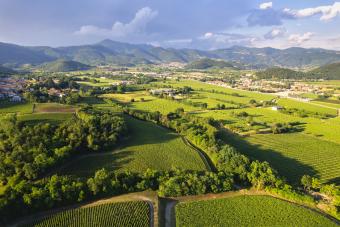
Remember, Spain is predominantly a dry country with limited rainfall and difficult soil for agriculture. At best vineyards are low-yielding, which can produce high-quality grapes. Improved viticulture and winemaking practices only make for more efficient production and improved wines. Consequently, regions that could only produce Sangria-ready wines can now put out exceedingly drinkable wines of note and surprise for even the pickiest wine person with attitude. The following are some DOs to look for that are rising to the top.
- Rueda
- Toro
- Navarra
- Calyatalud
- Jumilla
- Yecla
Bodegas of Note
The following are a handful of bodegas or wineries that will make you aficionados of Spanish wine. Most are commonly available at fine wine retailers and restaurants. You will find a generous amount of excellent value wines for less than $15, even $10. Above that, Spanish wine can be an even more rewarding adventure. When in doubt, ask your wine dealer for advice.
Rioja
- Finca Allende
A brother and sister winery operation in Briones in the Rioja Alta. Dedicated to seeking Rioja perfection.
Their Crianza Rojo is always a no-nonsense great value and widely available.
One of the oldest and best bodegas in Rioja.
The Martinez Bujanda family holds four bodegas. The Conde de Valdemar Crianza is practically a staple in the house and Martinez Bujanda is creative and innovative in producing Rioja wines.
A family bodegas since 1932 making traditional style Rioja that are complex and exquisite things and also New World-style wines that are over-the-top.
Ribera del Duero
It's just over the border from Ribera del Duero, but it belongs there anyway. Abadia Retuerta is one of the largest bodegas in the area and has top-end and value wines. Difficult to avoid them when traveling in the area, but who would want to?
Señor Fernández's Tinto Pesquera is not to be denied, ignored, nor missed.
Mariano García was the winemaker at Vega-Sicilia. He is partner and winemaker at this small bodega just outside of the Duero. García has since gone on to start a new bodega in Toro, an emerging DO to the east down the Duero river towards Portugal. Look for Bodegas y Vinedos Maurodos and try his Prima, it's a red for less than $15 and is lush and spicy with some tannic grip.
Legendary—but in Spain, many things are.
Penedès
Over five centuries of winemaking. Don Jose Raventós brought back the French méthode champenoise in 1860 and voilà, fun sparkling Cava.
Of course the world is a better place with Freixenet in it.
Oh those Freixenet people, they have their finger in every pie. Segura Viudas produces both Cava and still wines.
A large Catalonian bodega with clout and presence.
Priorato
- Clos Mogador
Creates intense reds blended with Garnacha, Cabernet Sauvignon, Syrah, Pinot Noir, and Mourvèdre.
- Alvaro Palacios
Perhaps some of the most expensive wine in Spain. Superstar Alvaro Palacios apprenticed at Château Pétrus and his Clos L'Ermita rivals a Vega-Sicilia, both in essence and price.
Rías Baixas
One of the newer bodegas to open since Galicia became a DO and Albariño began getting attention.
This vineyards at this bodega date back to 1591. The Portuguese and the Galicians have battled over ownership for centuries; currently it is firmly planted in Spain.
Jerez
One of the best sherry bodegas around.
Tio Pepe sherry has a full range of Finos, Manzanillas, Olorosos, Amontillados, Pedro Ximénez.
A long established bodega with a complex and nutty Manzanilla La Gitana.
Look for the bull on their label.
Learn More
This page has been accessed 11,521 times. This page was last modified 00:43, 24 June 2009.
© 2006-2009 LoveToKnow Corp.
Visit us on facebook