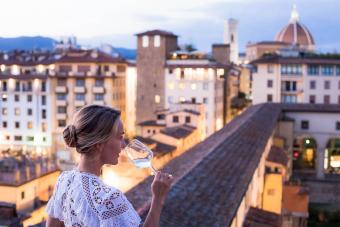
Italian wine regions vary greatly from the cool-weather Alps, to the rocky island of Sardinia, to the rolling hills of Tuscany. Each wine region is distinct with unique terroir and a diverse collection of native and regional grapes. From the North to the South, these winemakers are setting the bar, creating expressive wines that highlight their micro-region.
Geographical Wine Zones of Italy
Italy has 20 distinct wine regions that can be divided into four geographical zones. The climate, soil, culture, and wines vary drastically between each zone and create a diverse representation of the country as a whole.
Northwest

While most famous for the Piemonte region, the Northwest also includes the subalpine regions of Valle d'Aosta and Lombardia along with Liguria and even the Emilia part of Emilia-Romagna. The heavy hitter reds, Barolo and Barbaresco, are well-known here, and there is a rich history of these classic wines produced in the hills of the Langhe. Delicate expressions of dolcetto also come from these hills, along with numerous whites such as arneis, moscato bianco, and cortese. While it seems there are endless wineries tucked between the vines, a few really stand out.
- G.B. Burlotto - Nestled in the tiny town of Verduno, the Burlotto family has produced classic, complex Barolo, barbera, dolcetto, pelaverga, and nebbiolo rosé since the 1850's.
- Giuseppe Rinaldi - Founded in 1890, the Rinaldi name is an iconic and well-known producer of exceptional Barolo in the region of Piemonte.
- Réva - New(ish) comer, Réva, established itself in Monforte d'Alba in 2011. They produce organic nebbiolo, barbera, and dolcetto.
- Azienda vitivinicola San Fereolo - Nicoletta Bocca is at the helm of the winery and has transformed the site into a Demeter-certified biodynamic vineyard. She produces particularly exceptional Dolcetto di Dogliani DOC.
- La Stoppa - Situated in the Trebbiola Valley in the province of Piacenza, at the northern edge of Emila-Romagna, Elena Pantaleoni has been running the estate for over 30 years and works with barbera, bonarda, semillon, merlot and other Bordeaux varietals.
- Denavolo - This small family estate is on the plain of the Po River in the province of Piacenza. They focus on indigenous varieties, including ortrugo, which is only cultivated in Piacenza.
Northeast

The Northeastern zone captures Veneto, Trentino-Alto Adige, and Friuli-Venezia Giulia. Prosecco and pinot grigio are prolific among these hills, with the regions of Soave, Valpolicella, and Bardolino also being popular. Farther south, near Bologna, is where you'll find lambrusco and pignoletto while Trentino-Alto Adige produces a handful of indigenous varieties such as marsemino, teroldego, and nosiola. The dry, metodo classico sparkling white, Franciacorta, also comes from this zone. Look for wines from the following winemakers:
- Foradori - Elisabetta Foradori is a house name for great wines from Northern Italy. The stunning estate in Mezzolombardo is now primarily run by her three children and is full of diversity with vegetable gardens scattered among the vines and most recently, cows for raw milk cheese production. The use of amphorae here is chef's kiss.
- Gravner - Josko Gravner is the pioneer of grippy, long-aged amphorae wines from ribolla and pignolo on the border of Italy and Slovenia. These wines have set the tone for many to follow and continue to be incredibly complex and nuanced.
- Carolina Gatti - Working in the prosecco region of Veneto, Gatti converted her family's 250-year-old estate and is making natural bubbles in the ancestral method.
- Costadilà - A staple of the north, Costadilà produces organic bubbles isolated from specific elevations within the polyculture farm. Along with glera, they use lesser known varieties including bianchetta trevigiana and verdizo.
- Prà - Situated in the heart of the Soave appellation, Prà focuses on producing whites with finesse; though Graziano also produces stunning Amarone della Valpolicella as well.
Central

The Central zone encompasses a huge swath of the country, including the following regions: Tuscany, Umbria, Marche, Abruzzo, and Molise. The long spine of the Apennine mountains naturally divides the west coast from the east coast. Grapes are planted in the foothills and beyond on either side, with sangiovese dominating much of the landscape. Tuscany is without a doubt the most well-known region within this zone with Brunello di Montalcino, Vino Nobile di Montepulciano, and the ubiquitous Chianti. Montepulciano, trebbiano, and verdicchio are also widely planted here. More recently, international varieties like cabernet sauvignon, merlot, chardonnay, sauvignon blanc, and pinot noir have been planted with favorable results. Notable winemakers include:
- Emidio Pepe - Emidio Pepe is known as a pioneer of biodynamic winemaking in Central Italy, creating some of the most age-worthy and compelling montepulciano and trebbiano d'Abruzzo you'll find.
- Paolo Bea - The Bea family produces organic sagrantino, sangiovese, and montepulciano in the tiny town of Montefalco in Umbria.
- Ancarani - In the Romagna side of Emilia-Romagna, Claudio is a third-generation winemaker focusing on indigenous varietals such as albana, burson, centesimino, and famoso.
- Vini Rabasco - Rabasco produces trebbiano d'Abruzzo and montepulciano d'Abruzzo in a unique set of micro-climates in the province of Pescara.
- Podere le Boncie - Giovanna Morganti creates beautiful wines at her tiny estate in the southern tier of the Chianti Classico zone.
South

The Southern zone encompasses the regions of Sicily, Apulia, Sardinia, Calabria, Basilicata, and Campania. The terroir ranges from volcanic soil in the north to hilly to flat and arid in the Apulian countryside. Commonly grown red grapes include aglianico, negroamaro, nero di troia, primitivo, malvasia nera, nero d'avola (on the island of Sicily), and cannonau (on the island of Sardinia), whereas the widely planted white grape varietals are fiano, falanghina, bombino, and vermentino (on the island of Sardinia). Notable winemakers in the Southern zone of Italy are:
- COS - Giusto Occhipinti of COS is a staple natural wine producer in the Vittoria appellation of Sicily. He's known for his Cerasuolo di Vittorio and Pithos Rosso, aged exclusively in amphorae.
- Azienda Agricola Arianna Occhipinti - Arianna learned from the best, her uncle Giusto of COS, and started producing exceptional Sicilian wine at the young age of 24. Her biodynamic estate is abundant with zibibbo, albanelle, grillo, frappato, and nero d'avola.
- Tenute Dettori - Alessandro Dettori produces wines on the rugged and beautiful northwest corner of the island of Sardinia. With an absolute passionate for biodynamics and a light hand in the cellar, he creates unique expressions of vermentino, cannonau, monica, bovale, and moscato di sennori.
- Alessandro Viola - Sicilian wine genius, Alessandro Viola, produces grillo, nero d'avola, syrah, nerello mascalese, and catarratto on his small estate in Alcamo, Sicily.
- Natalino del Prete - Back on the mainland, Natalino produces organic primitivo, native negroamaro, malvasia nera, and aleatico in the sun-baked countryside of central Apulia.
Italian Wine Brands Offer Endless Variety
Italy is brimming with innovative and classic winemakers creating compelling and expressive wines throughout each region. While many wines are exported and can be found at speciality bottle shops or through online retailers, many don't travel as far as the states, which mean you may just need to book a wine trip to go find these gems yourself.


