French Wine

From LoveToKnow Wine

French wine labels can be confusing. You’ve heard of Bordeaux—you know it is an expensive, highly prized wine. But what does ‘Grand Cru Classé’ mean? Maybe you are familiar with Sauternes and Sancerre, two popular white wines, but… is Sancerre the grape or the region? Will Sauternes be sweet or dry?

French Wine

Learning about French wines — learning about any country’s wine, really — comes down to a study of two topics: regions and grapes. Certain regions, particularly in Old World countries, build their reputations on particular grapes and styles of wine. In France, there are laws limiting the varieties of grapes grown in different regions. While such laws may seem restrictive, they benefit the consumer enormously. After all, who doubts what to expect from a bottle of Champagne?

Here is a whirlwind overview of the winemaking regions and grapes of France.

Bordeaux

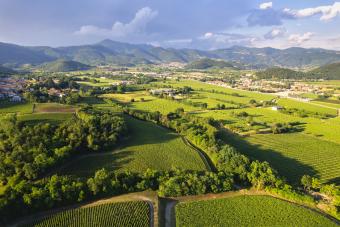
bordeaux region of france

Primary Grapes: Cabernet Sauvignon, Merlot, Cabernet Franc (red); Sauvignon Blanc, Sémillon (white)

Major regions and wines of Bordeaux:

  • The Left Bank includes the Medoc, a famous group of towns producing Cabernet Sauvignon-based wines. The best estates were ranked according to quality in 1855, and the 61 crus classés rank is still highly influential today. Château Latour and Château Lafite-Rothschild are celebrated examples of Premiers Crus, the highest classification.
  • The Right Bank, including Pomerol and St-Émilion, represents the east side of the Gironde River. Its wines, including the legendary Pétrus, are Merlot-based blends.
  • Sauternes is Bordeaux’s most distinctive French wine. Production of Sauternes depends on botrytis, the “noble rot” which attacks the grapes on the vine, shriveling them and concentrating the juices. Sémillon and Sauvignon Blanc are the grapes of this sweet, honeyed wine.

Burgundy

Primary Grapes: Pinot Noir and Gamay (red); Chardonnay and Aligoté (white)

Regions of note within Burgundy:

  • The Côte d’Or encompasses such famous villages as Meursault, Gevrey-Chambertin and Vosne-Romanée. Pinot Noir and Chardonnay reign here, producing elegant, concentrated, and long-lived wines. Grand Cru and Premier Cru are quality designations, indicating the vineyard’s historical reputation.
  • Chablis, technically a part of Burgundy, is removed from Burgundy proper and is one of France’s most northern wine regions. There are Grand Crus and Premier Crus in Chablis, useful designations of quality.
  • Beaujolais, known primarily for its quick harvest-to-sale Beaujolais Nouveau, is a juicy, fruity wine made from the Gamay grape. Step up to Beaujolais-Villages or one of the 10 crus (elite villages) and you will taste a wine noticeably more interesting.
  • Other important regions include the Mâconnais, which produces somereasonably-priced Chardonnay, and the Côte Chalonnaise, which grows all four of the main grapes of Burgundy.

The Loire Valley

Primary Grapes: Pinot Noir, Gamay, Cabernet Franc (red); Chenin Blanc, Sauvignon Blanc, Melon de Bourgogne (white)

It’s impossible to summarize the Loire Valley. The Loire Valley produces red, rosé, and white wines, in both dry and sweet styles, and some sparkling wine! The region follows the Loire River from Sancerre as it winds north, then west, making its way toward the ocean.

There are three main zones of the Loire Valley:

  • The Upper Loire’s most accessible wines are Sancerre and Pouilly-Fumé, both dry, crisp whites made with Sauvignon Blanc. Sancerre also produces small amounts of red and rosé with Pinot Noir. Reuilly, Quincy, and Menetou-Salon are other villages which specialize in Sauvignon Blanc.
  • The most important grapes of the Middle Loire Valley are Chenin Blanc, Gamay, and Cabernet Franc. French wines are available in every imaginable style here, from rosé Cabernet d’Anjou and botrytis-affected Bonnezeaux, to sparkling Crémant de Loire and the Cabernet Franc-based Chinon.
  • The western Loire includes the Muscadet region, whose primary wine is made from the Melon de Bourgogne grape.

Alsace

Primary Grapes: Riesling, Gewürztraminer, Pinot Gris, Pinot Blanc, Sylvaner, Muscat (all white)

Information and Terms:

  • Alsace is the only region in France where the grape variety is permitted on the label. Alsace prides itself on producing dry, aromatic wines with high acidity. Riesling is the prized grape and demonstrates extraordinary aging potential.
  • There are over 50 Grand Cru wines, though the designation does not guarantee quality.
  • Vendange Tardive (VT) wines are made with late harvest grapes and range in style from dry to sweet. Sélection des Grains Nobles (SGN) wines are made from even riper grapes, and these sweet wines are often concentrated by botrytis (a beneficial fungus which concentrates the juice in grapes).

Champagne

Primary Grapes: Pinot Noir, Pinot Meunier (both red), and Chardonnay

Champagne is all about blending. A Champagne house buys grapes from all corners of the region, from the Côte des Blancs to the Montagne de Reims, and ends up with dozens of different wines. These wines are blended together, along with some reserved wine from previous vintages, to create the house’s style. Single vineyard wines are virtually unheard-of in Champagne. In good vintages, some houses will make Vintage Champagne from the year’s grapes. This is a more expensive wine, generally with greater aging potential.

The Rhône Valley

Primary Grapes: Syrah and Grenache (red); Marsanne, Roussanne, Viognier (white)

The Rhône can be separated into two regions:

  • The Northern Rhône is best known for its red wine, made with Syrah. Côte Rôtie and Hermitage are famous regions of the Northern Rhône, producing incredibly concentrated and rich, beefy wines. White wines, made with Viognier in Condrieu and Château-Grillet, are full-bodied and peachy.
  • The Southern Rhône is a bit more complicated. Instead of single variety wines, Southern Rhône wines are blends. Grenache is the primary red grape and is usually blended with Syrah, Cinsaut, and Mourvèdre. White wines are generally blends of Marsanne and Roussane. Châteauneuf-du-Pape is the Southern Rhône’s best wine, with up to 13 grape varieties—both red and white--allowed in the blend. Other noteworthy regions include the Côtes-du-Rhône and Côtes-du-Rhône-Villages, whose wines are often great values; Tavel, a historic rosé made with lighter-skinned red grapes; and Muscat de Beaumes-de-Venise, a fortified, sweet Muscat.

Articles Related to French Wine


Comment on French Wine


(Displayed with your comment)                        (Will not be displayed)
Verification Code:   
    

Wine Categories
LoveToKnow Tools