Beringer
From LoveToKnow Wine
Beringer Vineyards, Napa Valley's Stellar Winery with a Rich Heritage
The sense of Beringer's presence in California's wine industry is easily observed on a visit to the winery's historic Rhine House in Napa Valley's St. Helena on almost any day, particularly a summer weekend. The parking lot is jammed with cars and buses, the grounds are crawling with visitors, and the tasting rooms are sardine cans full of wine drinkers in for a sample of Beringer's craft. The winery encompasses the best and broadest range of California wines from its upper-tier Cabernet Sauvignon to its Merlot, its Alluvium blends, its Chardonnays, and even all the way down to its damnable White Zinfandels. Beringer may in fact represent California's best all-around winery. Since its inception in 1876 by the brothers Frederick and Jacob Beringer, the winery has endured history, the 18th Amendment, phylloxera, modernization, numerous mergers and acquisitions, wine critics, and ultimately the biggest challenge, its own popularity. Throughout, Beringer has strived to achieve and maintain quality, character, class, and excellence.
The Brothers Beringer and Rhine House
Frederick and Jacob bought the original property in 1875 and built the winery in 1876, chiseling out the hillside tunnels to store the wines they were to make. Even today, the storage cellars hover at 58˚, the perfect temperature for aging the fermented grape's nectar. In 1883, the Rhine House was built as Frederick's house. This is a 17-room ornate Victorian with impressive exterior stonework, stained glass, gables, turrets, and lustrous woodwork inside that was built to emulate the Beringers' family home on the Rhine back in Mainz, Germany. Today, guests at Beringer can sip wine in the library, view the Napa Valley, the estate's lawns, and gardens from the veranda—all of the Brothers Beringer's familiar haunts. As a statement to the winery's longevity, Beringer is the state's oldest continuously operating winery. That's not an insignificant feat considering what has befallen many other wineries. As a further recognition to the winery's historic presence, the estate, along with the Rhine House, is registered by the National Registry of Historic Places. Naturally, the wine is the true measure of the Beringer heritage and that doesn't need a historic society's ruling to convince anyone. One bit of trivia that should not be neglected—in 1934, Beringer was the first winery in Napa Valley to open its doors to the public for touring. Think about it, without Beringer leading the way, what would people do on a Napa Valley wine tour? Birdwatching, perhaps?
The Vineyards
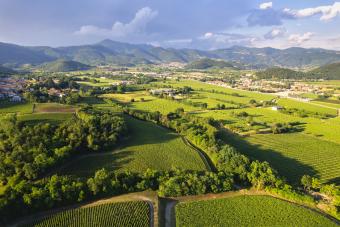
Beringer holds approximately 2,800 acres of vineyards in and around the Napa Valley and Knights Valley, which is a small AVA region northwest from St. Helena that serves as buffer zone between Napa Valley and Sonoma County. Unfortunately for some its competitors, it has some of the largest holdings and also some of the best.
The following are some of the significant and noteworthy vineyards to look for on Beringer labels:
- Bancroft Ranch—Howell Mountain
Merlot
- Chabot Vineyard—St. Helena
Cabernet Sauvignon
- Dos Rio Vineyard—Yountville
Private Reserve Chardonnay
- St. Helena Home Vineyard—St. Helena
Private Reserve Cabernet Sauvignon
- Knights Valley Vineyard—Knights Valley
Knights Valley Cabernet Sauvignon, Knights Valley Alluvium, and Alluvium Blanc
Ed Sbragia—Winemaster and Keeper of the Flame
There have been a long line of winemakers at Beringer since Jacob passed the duties on. Ed started under the wing of Myron Nightingale in the mid-1970s and took the helm as chief winemaker in 1984 upon his mentor's retirement. Ed has been the inspiration and backbone of Beringer's wine program since then, including its Private Reserve releases. He's been behind many of Beringer's award-winning wines. Currently he oversees the wine program but is also involved with his own Sbragia Family Wines and consults to others in the industry. Ed's assistant winemaker for many years, Laurie Hook, has taken on more responsibility as winemaker at Beringer, freeing up Ed to indulge in some of his other pursuits, yet following in his, and previous Beringer winemakers', footsteps.
Corporate Shuffle and Final Stop?
Supposedly imitation is the highest form of flattery. Maybe true, but getting bought by another company is another form and it includes financial incentives. In 1971, the giant Swiss food conglomerate, Nestle, bought Beringer. It is arguable that the acquisition saved Beringer. The new owners infused capital and business expertise into a faltering Beringer. The winery turned around, hiring Myron Nightingale as winemaker and other top wine industry staff, streamlining product lines, and modernizing capital equipment. Over the next decades, Beringer began acquiring wineries: St. Clement, Chateau St. Jean, and Meridian. Then a private group of investment bankers bought Beringer from Nestle in 1996 and then turned around during the period of economic "irrational exuberance" and took the company public. The exuberance for public ownership was short-lived, in 2000, Foster's Brewing Company Ltd. of Australia bought Beringer. Whew! Caught your breath? Wait, there's more. In 2001, Foster's decided to combine its other wine company, Mildara Blass (Wolf Blass) into one global wine dynamo, Beringer Blass Estates. The new Beringer Blass becomes a top level holding company managing a portfolio of wineries from Australia, the United States, Italy, and New Zealand. Sometimes a run of merger and acquisition disrupts a company's focus and commitment to its mission. So far so good for Beringer, as quality wine continues to flow.
Curse of the Zin
From a logical point of view I've never understood why this pink zinfandel is labeled white. No doubt a marketing ploy to distinguish it from the bygone days of Pink Champagne or just to play with consumer's heads. The next logical step is to ponder why the wine is made and who drinks it. Apparently the why is to satisfy the large number of people who actually drink it. I remember a couple of years ago at a private tasting at Beringer, the company wine host explained in hushed, surreptitious tones that Beringer sold more White Zinfandel than any other wine. The White Zinfandel of a different color will be in the stores for quite some time.
Wine Rundown
Beringer offers red, white, blush, and dessert wines. The wines that Beringer excels at are primarily with Cabernet Sauvignon, Merlot, Cabernet Franc, Chardonnay, and their inspired proprietary Alluvium Red and White blends. Prices run from $100 in the upper tier to everyday value wines in the sub-$15 and sub-$10 range. The following is a brief sketch of some of Beringer's offerings based upon brand.
- III Century
Premium Cabernet Franc and Cabernet Sauvignon from selected lots on Howell Mountain.
- Private Reserve
Special handcrafted Cabernet Sauvignon, Merlot, and Chardonnay from the Winemaster, Ed Sbragia. The Cabs and Chardonnay are blended from their best Napa Valley vineyards. The Cabs are full-bodied, elegant, concentrated, and exemplifies the best in Beringer. The Merlot is outstanding and from Bancroft Vineyard on Howell Mountain.
- Napa Valley
This is an array of reds and whites produced from Napa Valley. Mid-range prices from around $15-$35.
- Beringer Founder's Estates
High quality and value priced reds and whites from California varietals.
- Stone Cellars by Beringer
Low-end reds and whites in the sub-$10 range.
- California Collection
White Zinfandels and other blushing things.
This page has been accessed 10,298 times. This page was last modified 20:34, 15 August 2006.
© 2006-2008 LoveToKnow Corp.